Wednesday, 27 June 2012

Where to Compare and Find MPG


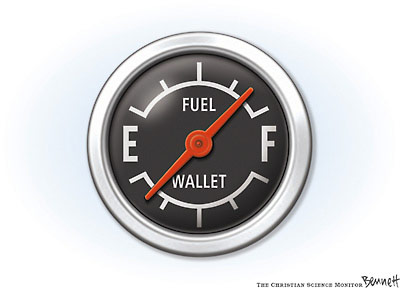
Getting great MPG is a perfect way to save money on a weekly basis.  With gas prices going down steadily, it’s still an effective way to save at the pump, keeping your money for something a tad more…fun.  MPG is an important factor in car buying.  Many of you come into our dealership looking for a vehicle that gets great MPG, but is still comfortable and fun to drive.  We get that.  So, in today’s blog, we’re providing some ways to find out and compare MPG to find the best fit for your budget, and your pockets.

Window Sticker
When you come into the dealerships, check out the EPA label with three combined numbers:
  • ·      City
  • ·      Highway
  • ·      Combined MPG

City MPG factors traffic, stop and go, and city streets.  Highway reflects an open road number, and a certain speed. The combined mpg rating is the most realistic whether than highway or city, because it’s a more realistic driving standard.   As of 2013, a new label that makes the combined MPG more prominent will be displayed with more information regarding annual fuel costs. 

Fuel Economy.gov
The U.S. Department of Energy has one of the best tools for looking up and comparing MPG, allowing consumers to search all the way back to 1984.  The website also allows you to make comparisons between vehicles, as well as customized driving data for more accurate results. According to Edmunds:

Clicking on the "Personalize" button takes you to a screen where you can input your annual mileage, the price of fuel in your area and the percentage of miles you drive in stop-and-go traffic. The "Fuel Economics" section of the page then shows you a variety of results, such as how much it will cost to fill the tank, the cost to drive 25 miles, fuel used to drive 25 miles, the average miles on a tank, the size of the tank and estimated annual fuel costs.”

What MPG do you look for?

Wednesday, 20 June 2012

10 Shocking Facts About Distracted Driving


Distracted Driving is a HUGE problem.  With the emergence of smartphones, it’s become even more difficult to direct 100% of your attention toward your primary task: driving.  In an effort to show you how important it is to focus on driving, we’re providing some key facts and statistics to show you just how distracted the average driver is.  Those type of distractions include:

  • Texting
  • Smartphone usage
  • Eating and drinking
  • Talking to passengers
  • Grooming
  • Reading maps and Navigation devices
  • Adjusting a radio
  • Important statistics (Courtesy of distraction.gov):


  • In 2010, 3092 people were killed in crashes involving a distracted driver and an estimated additional 416,000 were injured in motor vehicle crashes involving a distracted driver.
  • 18% of injury crashes in 2010 were reported as distraction-affected crashes.
  • ·       In the month of June 2011, more than 196 billion text messages were sent or received in the US, up nearly 50% from June 2009. (CTIA)
  • 11% of all drivers under the age of 20 involved in fatal crashes were reported as distracted at the time of the crash. This age group has the largest proportion of drivers who were distracted.
  • 40% of all American teens say they have been in a car when the driver used a cell phone in a way that put people in danger. (Pew)
  • Drivers who use hand-held devices are 4 times more likely to get into crashes serious enough to injure themselves.(Monash University)
  • Text messaging creates a crash risk 23 times worse than driving while not distracted. (VTTI)
  • Sending or receiving a text takes a driver's eyes from the road for an average of 4.6 seconds, the equivalent-at 55 mph-of driving the length of an entire football field, blind. (VTTI)
  • Headset cell phone use is not substantially safer than hand-held use. (VTTI)
  • Driving while using a cell phone reduces the amount of brain activity associated with driving by 37%. (Carnegie Mellon)
For more info, visit http://www.texasmotorsford.com

Wednesday, 13 June 2012

High School Student Wins Ford Ranger at Texas Motors Ford

Car giveaways ALWAYS bring out the best in people.  In this case, it's attendance.  However, anecdotal evidence suggests that it helps improve unexcused absences.  At Brewer High School officials spend a considerable amount of time inputing attendance data for this year, according to Principal Lorimer Arendse.  

"Every year we've done this we've seen an increase in perfect attendance," Aredse said.  "Obviously, if a kid is not in school, they're not going to learn.  We try to get them to see the value of coming to school."

Brewer High School works with Texas Motors Ford to offer a 2002 Ford Ranger truck to one special student.  This year, that student is Jeffrey Osbourne, a junior at Brewer High School who won the Ford Ranger pickup from Texas Motors Ford.  He doesn't ming that the vehicle isn't new, because Texas Motors Ford detailed the truck so that it runs well and looks like new.  Osbourne said: "I just turned 18 a while a go and we're low on money.  If you ask me, it's a free car, so I don't really care."

Now all he needs is his drivers license.  :-)

Thursday, 7 June 2012

Steps to Buying GREAT Auto Insurance


We’re car people.  From the accents and contours of a vehicle, to the drive and adrenaline of a fast car, we have a certain appreciation for the automotive machine.  As our passion, we’re great at finding a perfect fit for our customers.  When it comes to auto insurance, you want to be covered in the case you get into a fender bender.  So, in an effort to ease the burden, we’re providing 5 tips for finding the right coverage at the right price.  By doing some comparison shopping, you could save hundreds a year.   

Find the Right Coverage

Your first step should be to find a list of what is required in the state.  You can visit this link to find out: http://www.edmunds.com/auto-insurance/how-much-car-insurance-do-you-need.htmlthis will provide the minimum of what is required. Once you have that, you should decide what insurance premium you need.  Your decision depends on your degree of comfort and a certain level of risk.  According to Edmunds:

Experts recommend that if you have a lot of assets, you should get enough liability coverage to protect them. Let's say you have $50,000 of bodily injury liability coverage but $100,000 in personal assets. If you're at fault in an accident, attorneys for the other party could go after you for the $50,000 in medical bills that aren't covered by your policy.

Also, you don’t have to buy collision and comprehensive damage, especially if your vehicle is older than 2000.

Check Your Driving Record

How many tickets have you had recently? By checking your state’s department of motor vehicles, you can have a better idea of how you stack up.  For example, if points you earned on your license are about to disappear, this will improve your driving record.  So, we would recommend you wait until that happens before you receive quotes.

Solicit Competitive Quotes

You will need:
o   Current Policy
o   License Number
o   Vehicle Registration

Check out insurance company websites and receive a quote.  It’s easy to type in your information and build a list of companies for comparative quotes.  Each quote takes about 15 minutes to complete, but shopping around can save you hundreds.  Think about the annual and monthly rates for different types of coverage, note the 800 number so you can get more direct answers, and pay close attention to the insurance company payment policy. 

These are just a few tips to get you started.  For more info visit your favorite insurance company website for details.